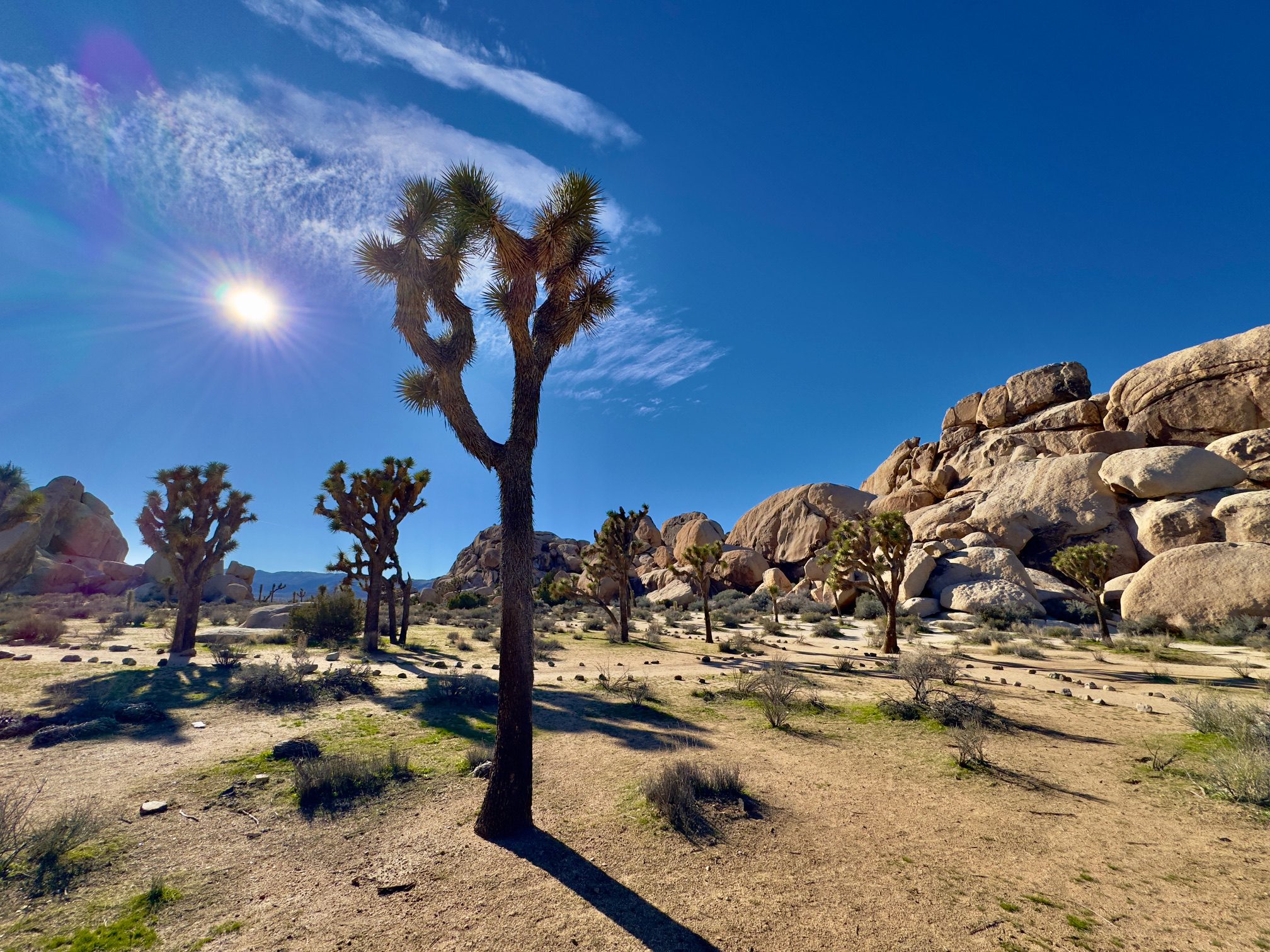
Joshua Tree National Park is one that gets a lot of hype and a lot of visitors, usually staying in the top ten most visited parks. This park sits where the Mojave and Colorado deserts meet creating a unique ecosystem containing plants and animals that cannot be found anywhere else. Joshua Tree officially became a national park in 1994 to protect its fragile environment from development, mining, and off-road vehicle use. Today, it is considered a great place to visit especially for families or beginner hikers because of the easy hikes at Joshua Tree.
Disclaimer: This post may contain affiliate links so if you make a purchase or booking through one of our links we might earn a small commission (but don’t worry, it’s no extra cost to you).
How to Get Here
The closest airport to Joshua Tree is the Palm Springs International Airport located about an hour away from the Joshua Tree entrance no matter if you are entering from the West or South Entrances. If you prefer to travel to a major airport and drive the rest of the way, there are 2 good options. The Los Angeles airport (LAX) is less than 3 hours away by vehicle (assuming no L.A. traffic), and Las Vegas’s airport (LAS) is about 3.5 hours by vehicle.
Where to Stay
There are several campgrounds within the park if you prefer to camp, and you can make your reservations for campsites at recreation.gov. If you prefer to stay in hotels, there are lots of budget-friendly options close to the park in the towns of Joshua Tree (located at the West Entrance) and Twentynine Palms (located at the North Entrance). My recommendation, however, would be to stay in Palm Springs. It is an hour drive away from the park, but it is an interesting drive with the terrain and plethora of wind turbines. These short, easy hikes at Joshua Tree will not completely fill your days. By staying in Palm Springs, you can partake in some of the activities happening in that area.
When to Visit
March and April are the best months to visit in terms of seeing wildflowers, temperatures being warm but not hot, and the days are getting longer. But because of all these awesome reasons, it is also the park’s busiest time of year. The next best time is in the fall because the temperatures are comparable to the spring, but the crowds are fewer. Winter is when I visited, and it is what I would recommend. The temps were cooler and downright chilly if the wind was blowing, but there were virtually no crowds even on the weekends. Parking lots were almost empty. You should really avoid visiting the park during the summer if at all possible. The temps exceed safe hiking conditions, and you will risk getting heat exhaustion.
What to Pack
Listed below are things I highly recommend you pack while you are seeing the Sedona things to do.
- Water!! Whether you use a hydration backpack or carry bottled water, make sure to pack plenty of water when outdoors!
- Sunscreen – Protect your skin from the sun, and do not forget to reapply. There is no shade in this park.
- Hat – More sun protection to block the sun from your face
- Hiking shoes/boots – Some of the hikes are on steep, slick rock, and people wearing regular tennis shoes struggled to keep their footing. Here are the men‘s version of the hiking shoes I love.
- Hiking socks – The best way to prevent blisters is by keeping your feet dry. Moisture-wicking socks are the best way to do that.
- Backpack – A backpack is a necessity when hiking to carry your water, snacks, sunscreen, etc. that you may need on your longer hikes.
- Printed Maps/Directions – Cell service is spotty when you are inside the park, so I recommend you print maps/directions to all hiking trails, wineries, and swimming holes you plan to visit with your Sedona things to do list.
Do You Need Entry Passes?
Yes. A pass to Joshua Tree National Park is $30 per vehicle for 7 consecutive days. If you plan to visit other parks on this trip or in the next year, it may be prudent to purchase an America the Beautiful U.S. Park Pass ($80) which will allow access to all three areas mentioned. This park makes you show your entry pass or America the Beautiful pass as you exit the park, so make sure to keep that handy.
Best Easy Hikes at Joshua Tree National Park
1. Hidden Valley Nature Trail
- Trail Length – 1.0 miles
- Elevation Gain – 114 feet
- Difficulty Rating – Easy
- Route Type – Loop
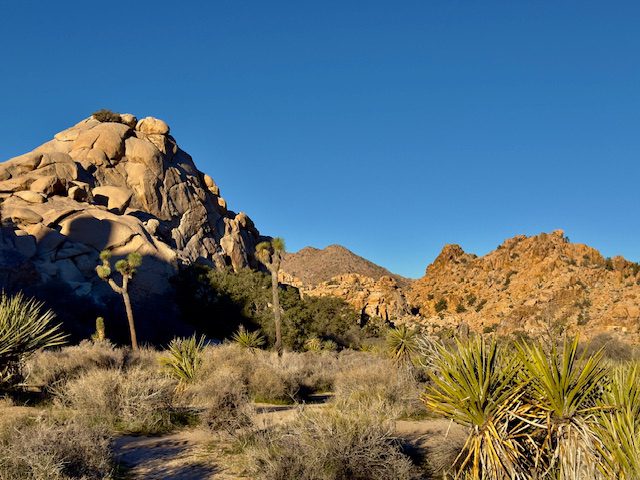
Hidden Valley is one of the most iconic and accessible hikes at Joshua Tree, offering a compact introduction to the park’s surreal geology and desert ecology. The loop winds through a natural rock basin once rumored to have been used by cattle rustlers, enclosed by towering granite monoliths that feel almost protective. Almost immediately, hikers are immersed in a landscape of massive boulders, narrow passages, and smooth rock faces that glow gold in the morning and late afternoon light.
Despite its short length, Hidden Valley delivers an outsized experience. Joshua trees, Mojave yucca, and pinyon pines dot the valley floor, while seasonal wildflowers may appear in spring following wet winters. Interpretive signs along the trail explain how the valley’s rock formations formed through millions of years of tectonic uplift and erosion, making this a great educational walk for first-time visitors.
Hidden Valley is also a world-famous rock climbing area, and it’s common to see climbers scaling the surrounding formations or learning techniques on beginner routes. This adds an energetic, communal feel to the area without overwhelming the sense of place. The trail is mostly flat with a few sandy and rocky sections, making it suitable for most ages and ability levels. Even though this trail is easy, there are stairs throughout the loop.
2. Barker Dam Trail
- Trail Length – 1.3 miles
- Elevation Gain – 65 feet
- Difficulty Rating – Easy
- Route Type – Loop
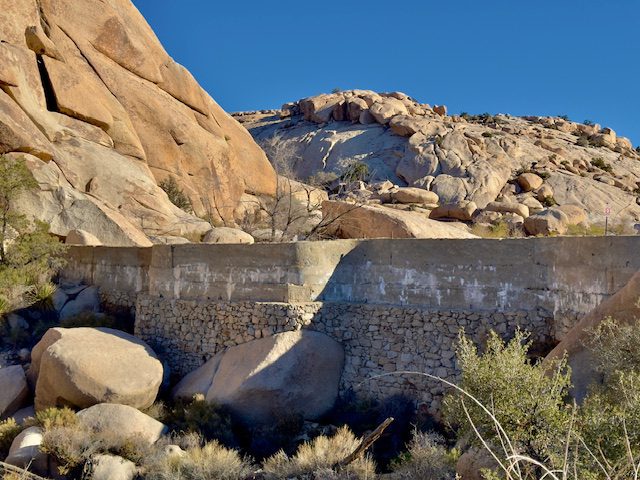
Barker Dam offers a fascinating blend of natural beauty, history, and quiet desert atmosphere. Built in the early 1900s by cattle ranchers, the small dam was designed to capture seasonal runoff and provide water for livestock. Today, it serves as a focal point for wildlife and a reminder of the human history woven into Joshua Tree’s rugged landscape.
The loop trail meanders through classic Joshua Tree scenery, with granite boulders rising above sandy washes and sparse desert vegetation. The terrain is relatively flat, making the hike approachable for most visitors. After periods of rain, water may collect behind the dam, creating rare reflections of rocks and sky that feel almost out of place in the desert.
One of the highlights of the Barker Dam trail is the opportunity to see Native American petroglyphs near the dam area. These ancient rock carvings offer a powerful connection to the people who lived in and traveled through this desert long before modern visitors arrived.
3. Skull Rock Nature Trail
- Trail Length – 1.7 miles
- Elevation Gain – 141 feet
- Difficulty Rating – Easy
- Route Type – Loop
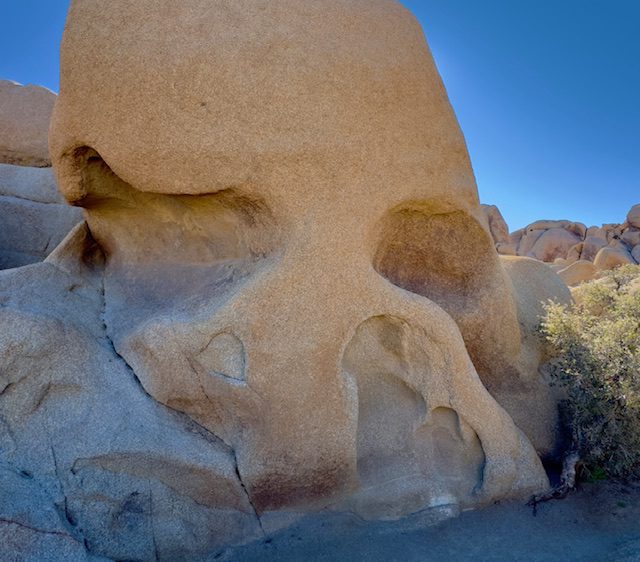
Skull Rock is one of Joshua Tree’s most recognizable landmarks, famous for its striking resemblance to a human skull carved by wind and water over thousands of years. Located conveniently along Park Boulevard, this short and easy trail provides instant visual payoff and is ideal for visitors with limited time or mobility concerns.
The trail area allows hikers to view Skull Rock up close and wander among surrounding rock formations that invite exploration. The granite here has been sculpted into smooth curves and hollows, creating countless nooks that feel playful and otherworldly. Joshua trees and creosote bushes punctuate the sandy ground, reinforcing the park’s classic desert aesthetic.
While many visitors stop briefly for photos, taking time to explore the surrounding area reveals additional perspectives and quieter moments away from the road. The light changes Skull Rock’s appearance throughout the day, with shadows deepening the “eye sockets” in the morning and late afternoon. This makes it a favorite stop for photographers.
4. Arch Rock Trail
- Trail Length – 1.2 miles
- Elevation Gain – 88 feet
- Difficulty Rating – Easy
- Route Type – Out & back
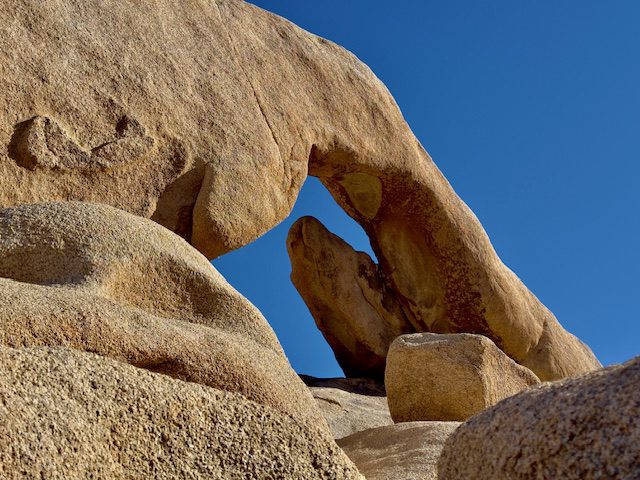
Arch Rock is one of the only hikes at Joshua Tree featuring an arch. The trail begins near the White Tank Campground and winds gently through sandy terrain dotted with Joshua trees and low desert shrubs. The walk itself is pleasant and scenic, offering a sense of quiet immersion before reaching the arch.
Visitors can walk around and beneath it, observing how erosion slowly shaped the formation over time. The surrounding boulder piles encourage exploration, with small scrambles and shaded pockets that invite lingering.
Because the trailhead is near a campground, Arch Rock sees steady but manageable foot traffic. For those seeking a gentle walk with a uniquely photogenic destination, Arch Rock is a standout. You will have to cross a major park road during this hike, so take precautions!
5. Cholla Cactus Garden
- Trail Length – 0.2 miles
- Elevation Gain – 9 feet
- Difficulty Rating – Easy
- Route Type – Loop
Unfortunately for me, this trail was closed for maintenance due to heavy winter rains that washed out parts of the path. You just never know how Mother Nature will derail your plans! However, I consistently see this one ranked in the top three hikes at Joshua Tree, so you should definitely put it on your list given it’s open.
6. Cap Rock Nature Trail
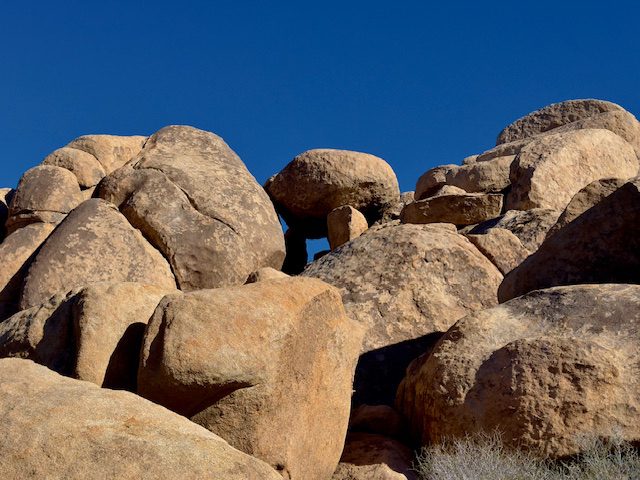
- Trail Length – 0.4 miles
- Elevation Gain – 22 feet
- Difficulty Rating – Easy
- Route Type – Loop
This nature trail is a brief but visually rewarding walk centered around one of Joshua Tree’s most whimsical rock formations. Cap Rock appears as though a massive stone “cap” has been carefully balanced atop a smaller base, demonstrating the park’s extraordinary geology. The short loop allows visitors to view the formation from multiple angles.
The surrounding area features classic Mojave Desert vegetation, including Joshua trees, yucca, and scattered wildflowers in spring. Informational signs along the trail explain how erosion and weathering created the unusual rock shapes seen throughout the park. Because of its accessibility and proximity to the road, Cap Rock is popular with families and casual visitors. It’s an easy stop that pairs well with nearby attractions like Hidden Valley and Barker Dam.
7. Keys View
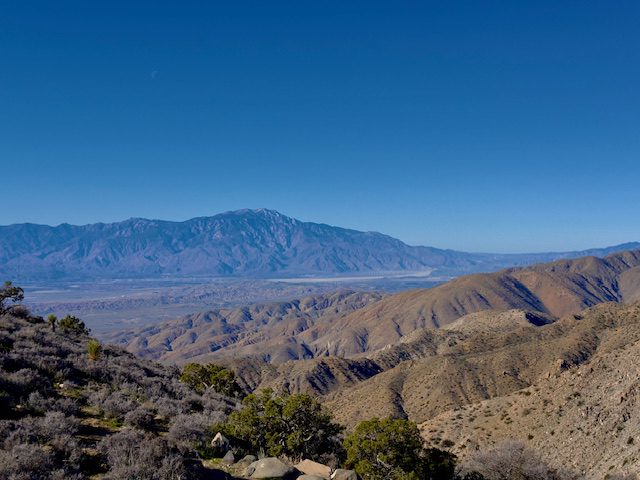
- Trail Length – 0.1 miles
- Elevation Gain – 13 feet
- Difficulty Rating – Easy
- Route Type – Loop
Keys View is less a hike and more a short walk to one of the most expansive viewpoints in Joshua Tree National Park. From this elevated overlook, visitors are treated to sweeping views of the Coachella Valley and the San Andreas Fault. On clear days, distant mountain ranges including San Gorgonio and Mount San Jacinto. The paved path makes this viewpoint accessible to nearly everyone Interpretive signs explain the geological forces that shaped the dramatic landscape below.
8. Hall of Horrors
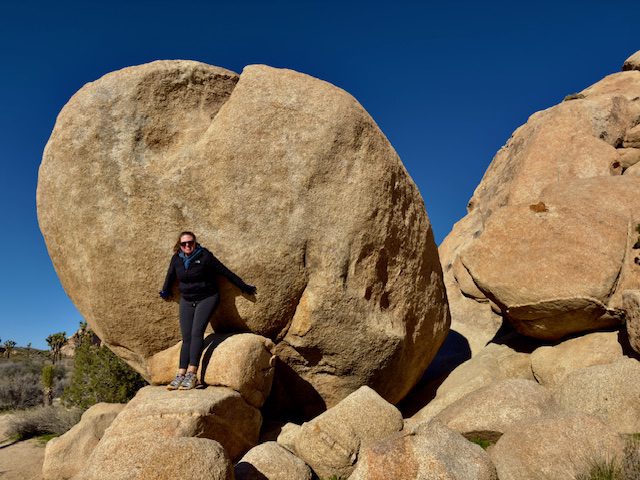
- Trail Length – 0.6 miles
- Elevation Gain – 26 feet
- Difficulty Rating – Easy
- Route Type – Loop
Hall of Horrors is a short but adventurous trail known for its maze-like boulder formations and dramatic rock corridors. Popular with climbers and hikers alike, this area showcases the vertical, sculptural side of Joshua Tree’s granite landscape. The trail winds through narrow passages, open sandy areas, and towering rock walls that feel almost cathedral-like.
Exploration is a big part of the experience here. While there is a general path, visitors often wander among the rocks, discovering hidden alcoves and unique perspectives. Rock climbers frequently practice on the surrounding formations, adding energy and movement to the scene.
Don’t let the name of this hike scare you away!
Honorable Mention – Cottonwood Spring Trail
There is could be listed amongst the easy hikes at Joshua Tree. At only 0.1 miles and 3 feet elevation gain, Cottonwood Springs Trail may be the easiest hike in the park. However, it is located near the South Entrance which is quite the drive from the main area of the park where all these other trails are located. If you happen to enter or exit through the South Entrance, this hike is worth a quick stop. But I would not make a special trip that far out of the way for it.
You May Also Be Interested In
California Dreaming: The Best 3 Days in Santa Barbara
San Diego Itinerary: How to Spend 3 Days
The Best of Los Angeles Itinerary: How to Spend 3 Days in Hollywood
Kings Canyon and Sequoia National Parks in Once Day: How to See the Highlights